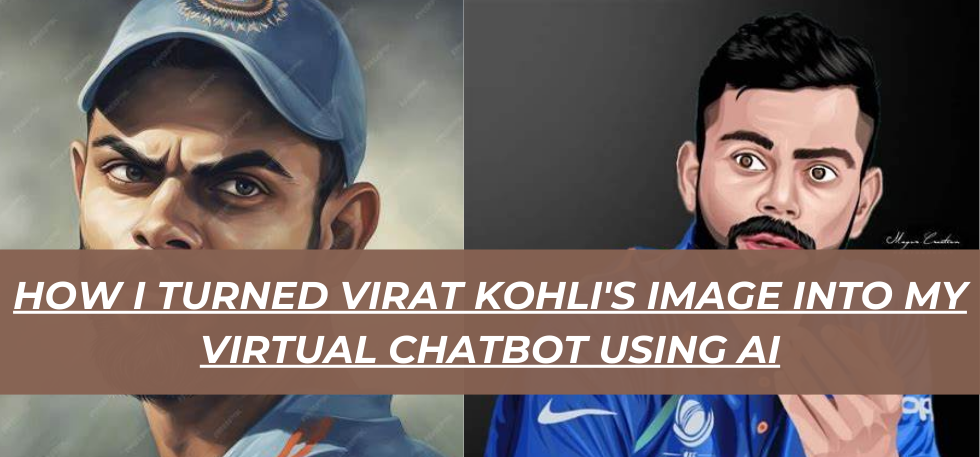
A long weekend gave me the perfect opportunity to dive into something I’ve always wanted to explore—artificial intelligence (AI) in sports. I’ve always been fascinated by how AI is transforming industries, and as someone deeply involved in cricket, I thought, why not bring the world’s best cricketer, Virat Kohli, into the virtual world?
That’s when I decided to try building a custom AI avatar. The idea was simple but exciting: create a virtual version of Virat Kohli, have him speak with real lip sync, and use this as a chatbot for my services. This post is all about how I did it, the tools I used, and why AI in sports could be the next big thing.
CHECK OUT THE VIDEO BELOW:
We’re in a world where digital and physical experiences are blending, and AI is driving that change. I thought, what if I could take a static image of a person and turn it into something interactive? Since cricket is my passion, I decided to take a well-known figure—Virat Kohli—and make him talk about my services.
I used a picture of Virat, uploaded it to an AI tool, and typed in a one-minute speech. The result? A chatbot version of Virat Kohli, pitching my services as if he were a virtual assistant!
Imagine the possibilities: sports icons, brand ambassadors, or even virtual customer service agents modeled after famous athletes. It’s a whole new world of interaction, and I was thrilled to explore this idea further.
For this experiment, I used @akool, an AI-driven platform that lets you create avatars and add lip-syncing capabilities to images. The tool itself is quite simple, and I was able to upload an image and type in my custom script within minutes.
I was still using the trial version, so there were watermarks, and the video quality wasn’t perfect, but the outcome was promising. With some fine-tuning and a premium account, I’m sure the results would be even better.
The Results: Virtual Virat in Action
The most fascinating part of this project was seeing the final output. The lip sync was about 6/10, which isn’t perfect but was surprisingly accurate for a trial run. The timing was right, and the expressions on the image even matched the speech to some degree. It wasn’t flawless, but for a quick weekend project, I was happy with how it turned out.
Another interesting aspect was how quickly the entire process worked. From uploading the image to generating the video, the AI processed everything much faster than I had anticipated. This ease of use makes AI tools incredibly powerful for people like me, who want to experiment without needing deep technical skills.
This experiment got me thinking about the future possibilities. If I could turn Virat Kohli into a virtual chatbot in just a few minutes, what’s stopping me from creating a Virtual Jay, an AI version of myself? Imagine an AI avatar that could handle tasks like answering customer queries, pitching services, or even hosting virtual events on my behalf.
This technology offers so many opportunities for automation, and it’s not just limited to cricket or sports. AI avatars could revolutionize how businesses interact with their customers in general.
AI in Sports: A Billion-Dollar Market
The potential for AI in sports is enormous. We’ve already seen how AI is being used for performance analytics, injury prevention, and fan engagement, but the idea of creating interactive avatars of athletes could add an entirely new dimension to sports marketing.
Think about it—sports teams could create virtual versions of their star players to interact with fans, offer personalized advice, or even promote merchandise. The ability to create virtual spokespeople opens up new revenue streams and engagement opportunities for both athletes and sports organizations.
This could become a billion-dollar market in the near future, and those who understand how to harness AI will be at the forefront of this revolution.
Final Thoughts: AI vs. Humans
Even with all this exciting potential, one thing became clear during my experiment: AI is only as good as the input it receives. While AI can generate impressive results, it still requires human creativity and direction to work effectively. If you don’t provide the right input, the output will fall short of expectations.
In the ongoing race between AI and humans, I believe humans still have the edge. AI can assist and enhance, but it’s not yet capable of fully replacing human judgment and skill.
Conclusion: Stay Hungry, Keep Innovating
This experiment was a small step into the vast world of AI, but it has opened my eyes to the endless possibilities that AI brings to the sports industry. As someone passionate about both cricket and technology, I’m excited to see where this journey takes me.
I’m always eager to connect with others who share the same enthusiasm for AI and sports. If you’re interested in collaborating or exploring this space further, feel free to reach out!